

Imagine cutting your next SaaS explainer video turnaround from four weeks to two days—without sacrificing clarity or polish. In 2026, that’s no longer a fantasy. With AI in explainer video production, B2B marketers are rethinking how content gets made, what it costs, and how quickly products can launch with compelling visuals. If you’re tired of long agency cycles and big budgets, here’s how AI can streamline your workflow, what to watch out for, and the tools teams are really using now.
AI in Explainer Video Production: Where It’s Making the Biggest Impact
The stats are clear: as of mid-2026, nearly two-thirds (63%) of video marketers report using AI tools somewhere in their SaaS explainer video workflows. But the biggest leaps aren’t just in flashy AI-generated scenes—they’re in time, money, and flexibility.
- Speed: AI-assisted workflows routinely shrink explainer video delivery from 1–5 weeks down to 24–72 hours.
- Cost: The typical 60–90 second SaaS explainer is now $1,500–$5,000 with AI—versus $5,000–$15,000 for human-driven equivalents.
- Scale: Teams can launch more updates, more frequently—syncing video releases to product announcements in a single day.
But what does this look like in meaningful steps, and how do you avoid the tradeoffs?
How Modern AI Streamlines SaaS Video Workflows
Let’s break down the real impact of AI in explainer video production—from ideation through editing:
1. Fast Scripting and Ideation
Instead of staring at a blank document or brainstorming points with your team, tools like ChatGPT or Claude (for text) and Descript (for video) are now standard. 50% of AI-using teams draft their scripts with AI—a fast way to get a rough narrative, then iterate with your product specialists.
2. Automated Visual Asset Creation
Here’s where the workflow accelerates. Products like Runway, Kling, and Veo 3.1 generate synthetic video clips or even entire demo scenes. Want generic workflow animations, cloud dashboards, or usage flows? Instead of hiring a motion designer, you prompt the system, fine-tune the output, and slot assets directly into your video timeline.

3. Avatars and Digital Presenters
For SaaS brands that need a spokesperson—without hiring talent or filming—tools like HeyGen and Synthesia let you generate a digital presenter reading your script. This is more common for brand explainer libraries or onboarding rather than for flagship product videos, but it’s growing in use.
4. Seamless Editing and Captions
Edit-by-text tools like Descript have become essential. You (or a marketer) can cut, reorder, and polish by editing text as if it’s a document. 59% of AI-assisted teams use AI for captions and transcripts, reducing manual effort and improving accessibility at once.
5. Rapid Iteration and Auto-Publishing
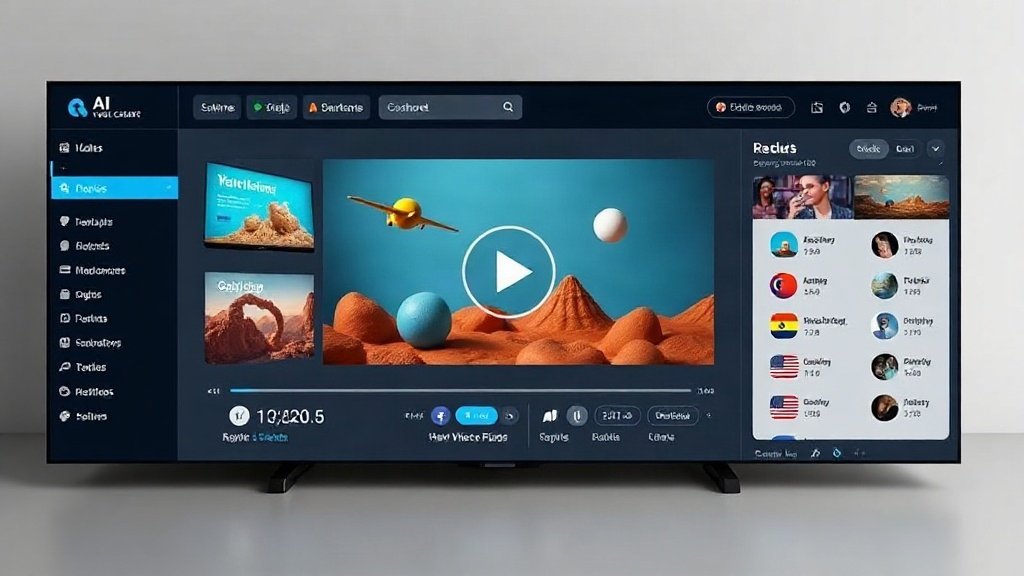
Once your validated assets are ready, modern AI video platforms (such as Vidquence) enable fast assembly, voiceover, built-in captions, and one-click publishing to YouTube or social—so your SaaS updates hit your audience fast, not weeks after launch.
What Does a Real AI-Driven SaaS Workflow Look Like?
Consider the case of a B2B SaaS company with $42 million ARR in 2026: Previously, every explainer video—whether new features, onboarding, or integration demos—meant a 6–12 week cycle with outside freelancers or studios. Moving to an AI workflow (using Veo 3.1 for cinematic shots, ElevenLabs for natural voice, and Seedance for curated visual assets), they now cut and launch videos the same day as product updates.
“Instead of paying $10,000 for a 90-second video and waiting a month, we’ll knock out three explainers in a week at a lower total cost than our old video line item.” – VP of Product Marketing
The result: more timely content, more product launches supported, and a bigger video presence—all for less budget and internal stress.
Where AI Excels—and Where the Tradeoffs Still Exist
AI dramatically increases speed, scale, and flexibility—but not without caveats. Here’s what the data and real-world teams reveal:
- Ideation and Scripting: AI helps overcome creative blocks and accelerates revisions, but it’s best used as a draft—review by subject matter experts is still essential.
- Synthetic Footage and Avatars: Quality has improved, but fully generated faces, hands, or motion physics can be inconsistent—especially for hero content. Character consistency and brand fidelity are top limitations.
- Editing and Captions: Modern tools are reliable—59% of AI-using teams report major time-savings from AI-assisted editing and caption workflows.
- Brand Alignment: Templated visuals make rapid iteration possible, but custom branding is still challenged by AI’s current limits. For key launches, some human touch or hybrid workflows remain standard.
And remember, the ecosystem isn’t static: OpenAI Sora, once widely used for video creation, was discontinued in April 2026—a reminder to diversify your tech and avoid tool lock-in.
Major Platforms Leading AI-Driven Video Production
- Runway: Fast, flexible synthetic video demos and background scenes.
- Kling: Avatars and dynamic visualizations tailored for SaaS teams.
- Seedance: Curated AI visuals for B2B product stories and selectables.
- HeyGen, Synthesia: Digital presenters and avatar explainers.
- Descript: Edit-by-transcript for rapid script and timeline fixes.
- Veo 3.1: Cinematic AI sequences for brand-driven video segments.
Modern all-in-one video platforms like Vidquence help unify these AI advances into a streamlined video workflow—quickly turning prompts, scripts, or SaaS blog posts into finished explainers with voiceover, captions, and instant publishing. That’s a huge edge for teams juggling multiple products or fast-paced launches.
FAQ: AI in Explainer Video Production for SaaS
How much do AI-assisted SaaS explainer videos really cost?
In 2026, teams report paying $1,500–$5,000 per 60–90 second AI-assisted video, compared to $5,000–$15,000 for traditional, human-driven work. Prices shift based on complexity (avatar use, custom branding), but the cost delta remains 2–3x.
Is fully AI-generated footage ‘good enough’ for flagship SaaS videos?
AI footage works best for onboarding, internal explainers, or updates. For ultra-critical ‘hero’ videos, marketers still prefer hybrid or human-led workflows to ensure perfect branding and polish.
Will I lose creative control with AI video production?
If you integrate AI as a tool (not a total workflow replacement), you gain speed and iteration but keep expert review in the loop. The best teams use AI for routine steps, not to replace creative strategy.
How do I choose which AI video tools to try?
Audit your current workflow—focus on where you see delays and bottlenecks (script writing, asset sourcing, editing). Start there: most teams combine platforms like Runway, Descript, and a unifying tool such as Vidquence to keep things simple.
The Bottom Line
The era of week-long explainer video cycles and sky-high agency costs is fading, thanks to AI’s rapid progress in SaaS video production. With smart integration—leaning on modern tools for scripting, assets, editing, and publishing—you can create more videos, faster, and with less budget risk. Just keep your eye on the tradeoffs, validate with your stakeholders, and stay ready to adapt as platforms evolve. Your next explainer could be live in 48 hours—not next month.